Project Overview
Process
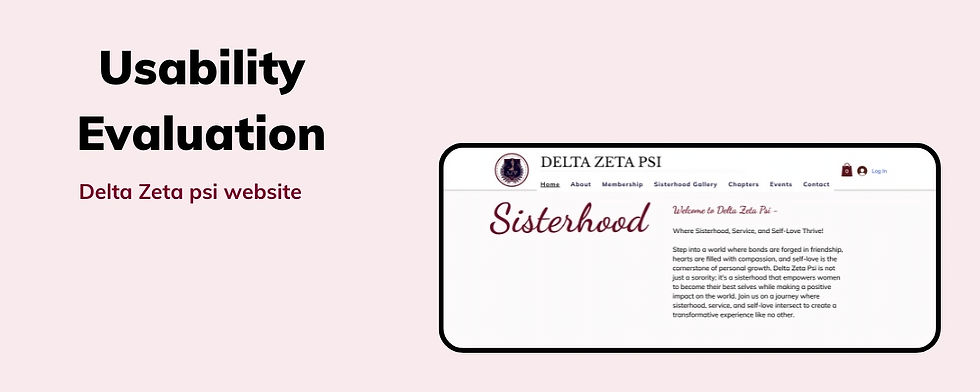
We began the project with a systematic assessment of the existing website using Nielsen’s 10 heuristics. This approach allowed us to identify usability issues without relying on real user testing, given the constraints of time, limited data, and a tight budget.
Evaluative Research
We began our evaluative research by revisiting heuristic evaluation principles as a team during our weekly meeting. Each member then independently assessed the website on a FigJam board, assigning severity scores (0–5) to identify usability issues. The images below showcase my heuristic evaluation of the About page of the DZP website. In our next meeting, we discussed our findings and prioritized key areas for redesign


I took the lead in synthesizing our findings into a clear, accessible slide deck for the design and cross-functional teams. My goal was to distill key insights into a format that made usability issues easy to understand, avoiding unnecessary technical complexity. Below are snapshots from the heuristic evaluation presentation.


Next steps
Some of the findings from the heuristic evaluation were straightforward and actionable, particularly regarding aesthetics, information hierarchy, and redundancy across various pages. The client granted us the flexibility to refine these elements without requiring approvals, as long as the website’s text remained unchanged. The visuals below illustrate the website’s transformation before and after the redesign.
Previously, the FAQ section contained inconsistently phrased questions, reflecting different perspectives (DZP vs. potential members). Additionally, some characters were missing, and certain elements required formatting. Based on our recommendations, the design team refined the content, ensuring greater clarity and consistency.

Similarly, the Contact page had inconsistencies—for example, the YouTube icon appeared in the footer alongside other social media icons but was missing from the contact section, which only featured Instagram and Facebook. Following our research recommendations, the design team updated the contact page for a more cohesive user experience.

Generative Research
Following the evaluative research process, we conducted generative research through surveys and usability testing. Our goal was to gain insights into user behaviors, needs, and experiences with the existing website.
Survey
We deployed targeted surveys to gather quantitative data on user preferences, pain points, and expectations using Google forms. Surveys are a valuable tool in User Experience Research (UXR) as they allow us, the researchers, to gather quantitative and qualitative data from a larger audience efficiently. We had the following objectives for the survey:
-
Understand user objectives in accessing a sorority website: What are top user goals? What, if any, opportunities are there to improve the website design?
-
Understand user mental model: How do users approach achieving their goals?
-
Recruit participants for usability testing

The survey results offered valuable insights that informed our decisions on structuring the website’s information hierarchy. By analyzing user preferences, behaviors, and engagement patterns, we identified and prioritized key sections—Event Calendar, Member Profiles, Sorority News, and Payment Options—to improve accessibility and enhance the overall user experience. Below are images showcasing how the menu sections were refined based on user feedback.

Furthermore, the survey also served as a screening tool, enabling us to recruit participants for the next phase: usability testing of the DZP website.
Usability Testing
To enhance the usability of the Delta Zeta Psi (DZP) website, we conducted a moderated, remote usability study with sorority-affiliated or interested women (21+ years old). The goal was to ensure the redesigned website effectively serves both current and prospective members across various devices.
Methodology
-
Format: 1:1 in-depth interviews (45 min)
-
Participants: Women interested in or affiliated with a sorority
-
Tools: Medium-fidelity prototype of the redesigned website
Objectives
-
Understand user motivations for joining a sorority
-
Identify expectations and pain points with sorority websites
-
Evaluate the clarity and accessibility of DZP’s website content
-
Assess the ease of the sign-up process
Recruitment Process
To recruit participants for the usability study, we leveraged our professional network and social media platforms, including Facebook groups, Slack communities, and LinkedIn. Despite a low response rate (<10%), we successfully recruited 14 participants who met the study criteria.
Key Findings
-
Navigation & Information Clarity:
-
Users found the homepage engaging but some key details about DZP’s mission were not immediately clear.
-
The About page effectively conveyed information but could benefit from better content hierarchy.
-
-
User Expectations vs. Reality:
-
Participants expected to see event details, membership benefits, and testimonials more prominently.
-
Some terminology and labels needed to be more intuitive for first-time visitors.
-
-
Sign-Up Process:
-
Most users completed the membership sign-up but encountered minor friction points (unclear next steps, missing confirmation messaging).
-
-
Overall Experience:
-
Participants appreciated the modern design but suggested improvements in content organization and visual cues for easier navigation.
-
Next Steps
Based on the user feedback, here are the next steps we recommended to the design team:
-
Refine content hierarchy on key pages (Homepage, About, Sign-Up).
-
Enhance visibility of important sections (e.g., Events, Membership Benefits).
-
Improve the sign-up process for a smoother, more intuitive experience.
Impact
Our research informed significant improvements in the website's aesthetics and functionality. Post-launch, the client reported up to a 50% increase in sorority registrations, indicating enhanced user engagement and outreach.
This project underscored the importance of adaptability, proactive problem-solving, and effective communication in overcoming project challenges.
Challenges Encountered
-
Client Engagement: Limited to two meetings due to the client's schedule, resulting in minimal direct user data and requiring our team to make informed assumptions.
-
Data Collection Issues: The existing website lacked user data tracking, and form submissions were inconsistent, alternating between JotForm and Google Forms. This inconsistency hindered our ability to perform effective usability testing. To address this, we recommended standardizing the form submission process to a single, reliable platform and ensuring proper integration to maintain consistent data collection.
-
Team Coordination: Operating across three time zones made synchronous meetings challenging. We addressed this by utilizing shared documents for asynchronous collaboration and setting clear deadlines.
-
Leadership Gap: During a critical two-week period, our team lead was unavailable. I assumed interim leadership, ensuring timely deliverables and seamless collaboration with product management and design teams, which enhanced my leadership skills.
Reflections
-
Value of Collaboration and Leadership:
-
Enjoyed working with four other researchers, each bringing unique perspectives.
-
Learned to balance my ideas with those of others, letting go of my ego when necessary.
-
Reinforced the importance of adaptability and trust in a team setting for smooth workflow.
-
-
Impact of Small Team Interactions:
-
Recognized the value of five-minute icebreakers at the start of each meeting.
-
Helped build relationships, foster open communication, and create a cohesive team dynamic.
-
-
Learning Leadership Skills:
-
Stepping into the role of interim lead enhanced my task management, coordination, and cross-team alignment.
-
Significantly improved my communication and leadership skills.
-
-
Area for Improvement - Client Communication:
-
Felt the client was unresponsive to queries, which hindered decision-making and alignment.
-
If I were the project manager, I would set clear communication agreements at the start, ensuring timely responses and a more efficient workflow.
-